Health
How to Hydrate Without Water: Discover the Power of Structured Water and Eating Your Water


Water is essential for life, yet when it comes to choosing the right water to drink, many of us feel overwhelmed. Walk into any grocery store, and you’ll find a dizzying array of water options—artesian, purified, ionized, distilled, volcanic, and more. How do you know which is best? And what if I told you that drinking water might not even be the best way to hydrate your body? In this article, you will be inspired by an insightful discussion on hydration. We’ll explore the fascinating science behind water, introduce you to the concept of structured water, and reveal how you can **hydrate without water** by eating the right fruits and vegetables.
The Importance of Water in Our Bodies and the World
Did you know that both the Earth and the human body are composed of roughly 70% water? This parallel isn’t just a coincidence. The saying “as above, so below” reminds us that what happens on a macrocosmic level (the Earth) is reflected in the microcosm (our bodies). Simply put, we become what we consume, and since we are made from the Earth, water forms the foundation of our health and vitality.
Understanding water’s role in the body is crucial. It’s not just about quenching thirst—it’s about nourishing every cell and supporting every function. But not all water is created equal, and the quality of water you consume can significantly impact your health.
Dr. Masaru Emoto’s Groundbreaking Water Research
One of the most eye-opening studies on water’s nature comes from Japanese scientist Dr. Masaru Emoto. He examined how environmental factors like music, words, and thoughts affect the molecular structure of water. Emoto’s experiments showed that water from a clean river displayed beautiful, symmetrical molecular patterns that resembled snowflakes. In contrast, polluted river water or sewage displayed chaotic, unattractive molecular structures.
Even more fascinating, when words were written on labels attached to water jars—words like “love” or “ugly”—the water’s molecular structure changed accordingly. Positive words created harmonious patterns, while negative words distorted the structure. This begs a profound question: if water responds to the energy around it, what impact does the environment and mindset have on the water in our bodies?
The Hidden Dangers in Tap Water
Most people get their water from city taps, but this water often contains contaminants that can harm our health. You may have heard about the Flint, Michigan water crisis involving lead contamination, but such problems are widespread. Common contaminants found in tap water include:
• Fluoride (a toxic contaminant)
• Traces of pharmaceutical drugs, including antidepressants and even hallucinogens
• Heavy metals like arsenic and lead
• Bacteria and viruses
Essentially, tap water can be a “chemical soup,” which raises concerns about drinking and even bathing in it. This is why it’s vital to choose your water carefully and invest in high-quality filtration systems for your home. Whether you live in an apartment or a house, filters can significantly reduce harmful contaminants and improve water quality.
Understanding Structured Water vs. Regular Water
Most people know water simply as H2O—two hydrogen atoms bonded to one oxygen atom. But there’s another fascinating type of water called structured water, which has a slightly different chemical formula: H3O2. Structured water is thicker, denser, more viscous, and hydrophilic (water-loving). It’s believed to increase energy, reduce inflammation, and even slow down aging.
Why does structured water matter? Unlike regular water, structured water stays in your body longer, providing more sustained hydration and nourishment. Interestingly, structured water is predominantly found in the foods we eat, especially fresh fruits and vegetables. This means you can actually “hydrate without water” by consuming the right foods!
There’s a growing market for devices claiming to “structure” your water, but, man has yet to perfect what nature has created. Instead of relying on machines, embracing natural sources of structured water through your diet is a safer, more effective approach.
How Environment and Energy Affect Water—and You
Remember Dr. Emoto’s experiments? They reveal that water is sensitive to its environment, including the music it’s exposed to. For example, soft classical music like Beethoven’s compositions produced beautiful water structures, while more chaotic or rushed music changed the water differently.
Imagine how your thoughts, emotions, and surroundings influence not just the water you drink but also the water within your body. Being mindful of your environment and mindset can help maintain the purity and beneficial structure of your internal water.

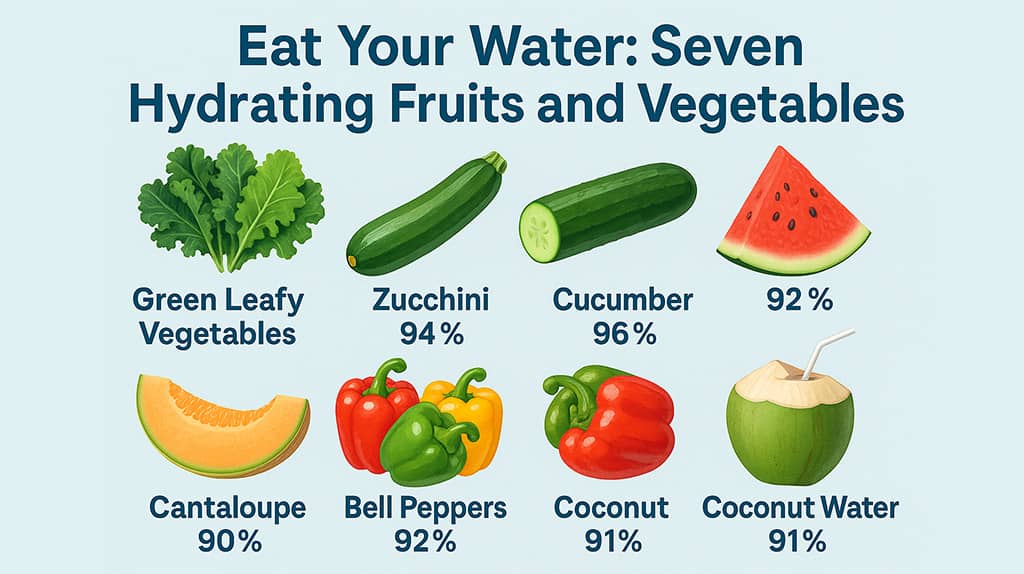
Eat Your Water: Seven Hydrating Fruits and Vegetables
Now for the exciting part: how you can **hydrate without water** by eating water-rich fruits and vegetables. These foods contain structured water, minerals, vitamins, and other nutrients that nourish your body deeply. Here are seven of the best choices to add to your diet:
Green Leafy Vegetables: Think kale, spinach, lettuce, and dandelion leaves. These are about 90-96% water and rich in chlorophyll, which is often called “plant blood.” Chlorophyll’s molecular structure closely resembles human blood, differing mainly by having magnesium at its center instead of iron. Green leafy vegetables help improve blood flow and provide essential nutrients.
Zucchini: At 94% water, zucchini is incredibly hydrating. Use it in salads, spiralize it into noodles, or dip it in guacamole as a healthy alternative to chips.
Cucumbers: A favorite for green juices, cucumbers are about 96% water and provide excellent volume to keep you hydrated.
Watermelon: This delicious fruit is 92% water and packed with vitamin A, magnesium, and calcium, which support hydration and overall health.
Cantaloupe: At 90% water, cantaloupe is another hydrating melon rich in potassium and magnesium, nutrients known to help regulate blood pressure.
Bell Peppers: These colorful vegetables contain 92% water and more vitamin C than oranges, making them a fantastic hydrating and immune-boosting snack.
Coconut Water: Coconut water is nature’s original sports drink. It contains natural electrolytes, healthy sugars, and fats. Unlike synthetic electrolyte drinks like Gatorade, coconut water provides real nourishment and hydration straight from the source.
By incorporating these foods into your meals and snacks, you not only hydrate but also nourish your body with structured water and essential nutrients.
Choosing the Best Bottled Water: Natural Spring Water Bottled at the Source
When you do buy bottled water, it’s important to look for **natural spring water bottled at the source**. This means the water is collected and bottled at or near its natural origin, often in mountainous or less populated areas where pollution is minimal.
Here’s why this matters: water evaporates from lakes or rivers, forms clouds, and eventually returns as rain. When rainwater travels down mountains, it picks up minerals like calcium, magnesium, and potassium, naturally alkalizing the water. These minerals are beneficial to our health and help maintain the water’s natural structure.
Avoid synthetic alkaline waters that add electrolytes artificially. Instead, opt for natural spring waters like Fiji Water or Mountain Valley Spring Water, which are bottled close to their natural source, preserving their mineral content and purity.

Final Thoughts: Hydrate Without Water—and Elevate Your Health
Water is fundamental to health, but not all water is equal. Understanding the differences between regular and structured water, recognizing the contaminants in tap water, and learning how to **hydrate without water** by eating water-rich fruits and vegetables can transform your hydration habits and overall well-being.
Remember the lessons from Dr. Emoto’s research: the quality and energy of water matter deeply. By choosing clean, natural spring water and nourishing your body with hydrating foods like leafy greens, cucumbers, and coconut water, you give your body the best chance to thrive.
Next time you think about hydration, don’t just reach for a glass of water—think about how you can eat your water and create a lifestyle that supports the purity and structure of the water inside you. Your body will thank you.